


Thank you! Your submission has been received!
Oops! Something went wrong while submitting the form.
By signing up for your free account, you agree to receive e-mails from Triggre.
By signing up for your free account, you agree to receive e-mails from Triggre.

When organizations look at AI for document-heavy processes, the discussion often starts with technology. In practice, the real question is simpler: where do we save time or create value, and how do we measure it?
Blueprints help answer that question. A Blueprint is a reusable process pattern that combines AI, automation, and human judgment. More importantly, it breaks a complex process into clear steps — which makes both implementation and ROI measurement much easier.
The document data extraction Blueprint is one example of this approach. It shows how document-heavy processes can be structured so that savings and gains can be calculated at each step.
The document data extraction Blueprint structures document handling into four steps:
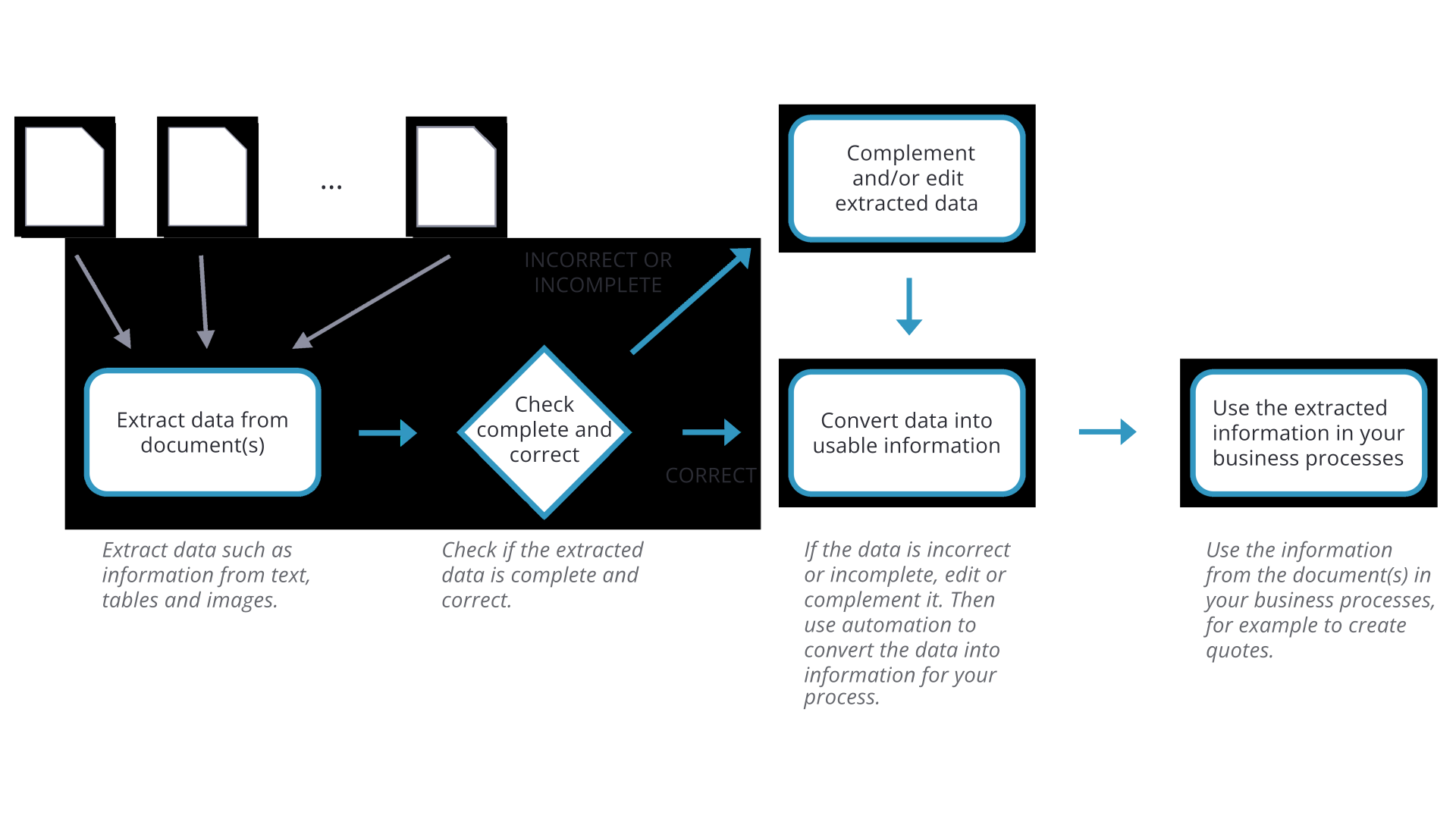
The strength of this Blueprint is its reusability. The same structure works for financial, legal, and operational documents. Only the extracted fields and validation rules change.
This allows organizations to start from a proven setup instead of rebuilding document automation for every new use case.
Companies working with many suppliers often receive multiple quotes in different formats. These need to be compared and combined into a single quote for the customer.
For example, in a construction business sourcing materials and components from different suppliers.
Using the document data extraction Blueprint:
The result is faster quote generation with less manual effort and more consistent output. ROI is calculated by adding up the savings per step and multiplying by document volume.
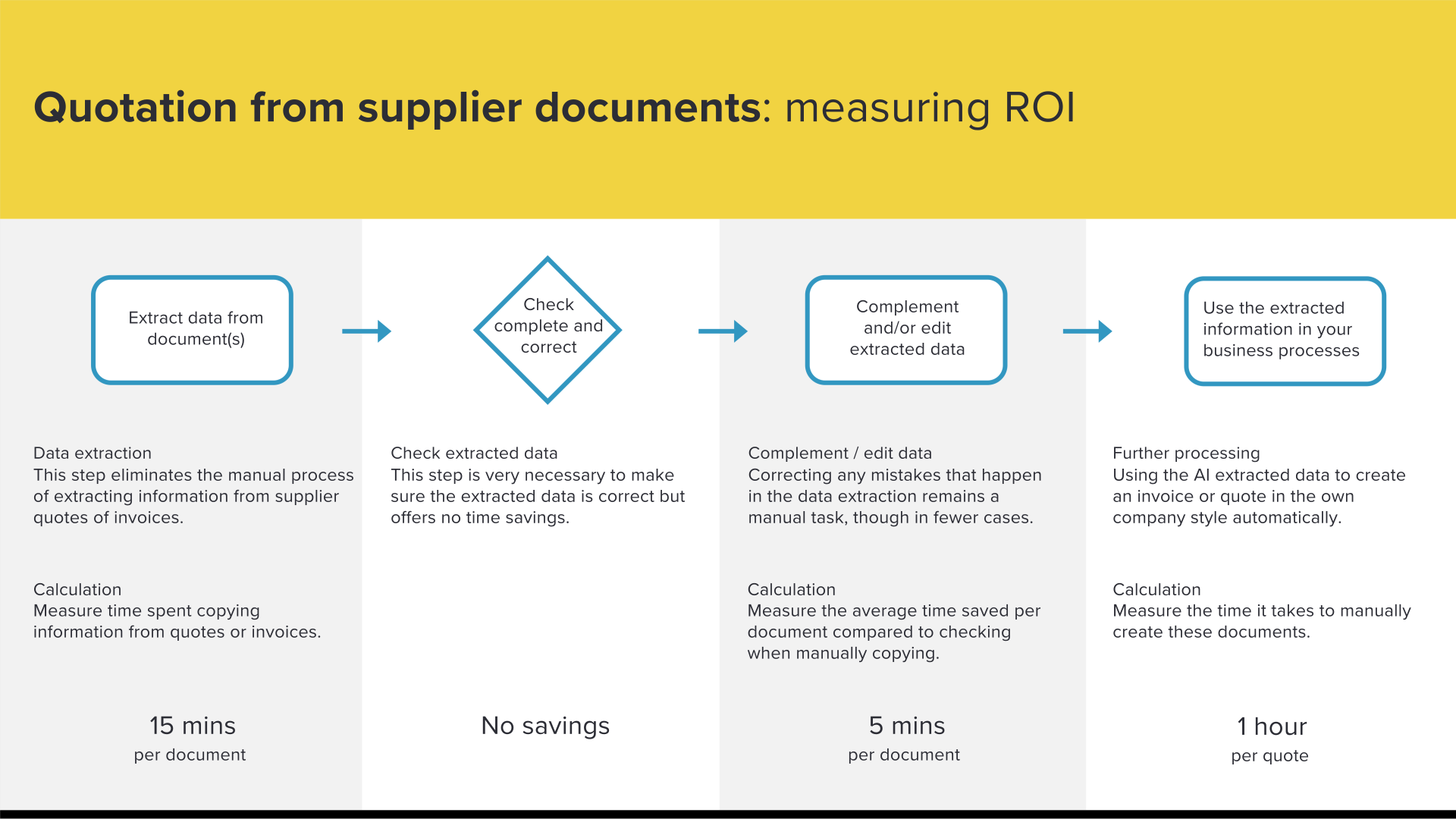
Manufacturers frequently analyze cost prices using supplier documents, bills of materials, and specifications. Manual consolidation often slows this down.
With the Blueprint:
This leads to faster analysis and more reliable input for pricing decisions.
Again, ROI is calculated by summing time saved at each step and applying it to real volumes.

By breaking processes into clear steps, organizations can:
The document data extraction Blueprint simply shows how this works in practice. The same step-by-step ROI logic applies to any process where AI, automation, and human judgment work together.


