Thank you! Your submission has been received!
Oops! Something went wrong while submitting the form.
By signing up for your free account, you agree to receive e-mails from Triggre.
By signing up for your free account, you agree to receive e-mails from Triggre.

Many organizations are experimenting with AI. Most of that experimentation focuses on personal productivity: writing emails faster, summarizing meetings, or creating visuals. Useful, yes, but these gains rarely show up clearly on the profit & loss statements.
The real opportunity lies elsewhere: embedding AI into repeatable business processes. To do that effectively, it helps to think in blueprints.
At Triggre, we work from a set of practical principles for integrating AI into business processes:
When you apply these principles consistently, you can start designing generic processes that work across multiple use cases. We call these processes blueprints.
A blueprint is a reusable, proven process pattern that combines AI, automation and human judgment. You don’t design it for one department or one task — you design it once, then apply it many times.
A common and highly valuable blueprint is document data extraction.
Many organizations process large volumes of documents every day: quotes, specifications, invoices, contracts, or technical drawings. These documents often contain a mix of text, tables, and images, making automation difficult.
The document data extraction blueprint addresses this challenge.
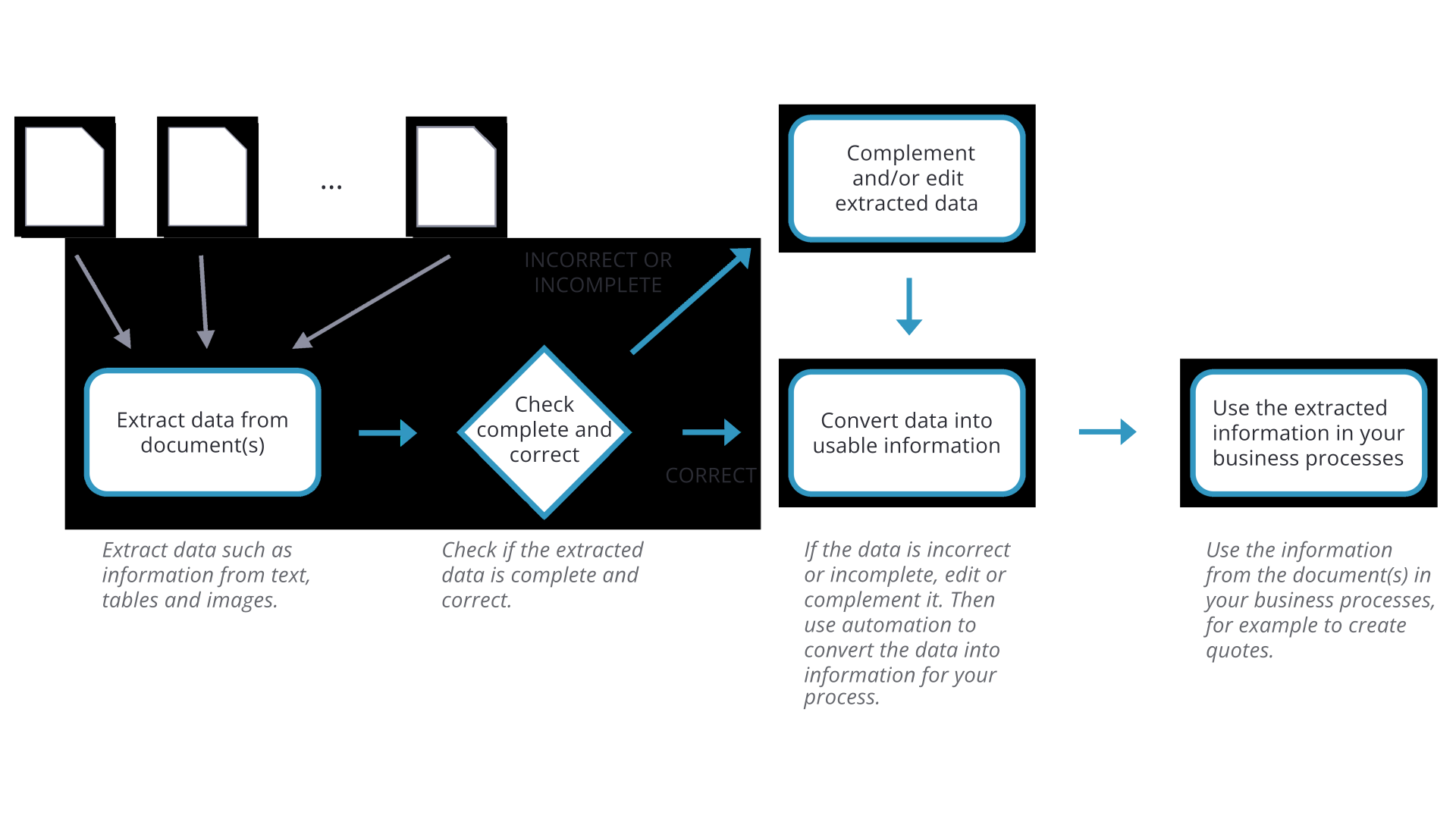
The blueprint follows a clear sequence of steps:
The strength of this blueprint is that it separates extraction, validation, and decision-making into small, manageable steps.
Because the process is generic, the same blueprint can be applied across industries and departments.
In subcontracting businesses, for example, teams often receive multiple quotes from subcontractors, each in a different format. Using the document data extraction blueprint:
The output is faster, more consistent quote generation with less manual work.
Another example: manufacturers frequently analyze cost prices based on supplier documents, bills of materials, and specifications. With this blueprint:
The same process, different outcome, without redesigning the workflow.
Many AI tools focus on individual efficiency. They help people work faster, but they don’t fundamentally change how the organization operates. Blueprints do — they are embedded in daily, repeatable processes.
For management teams, this distinction matters. Personal productivity gains are hard to measure. Process-level improvements show up clearly in throughput, cost savings, and risk reduction.